Microscopic beauty settles an age old conflict
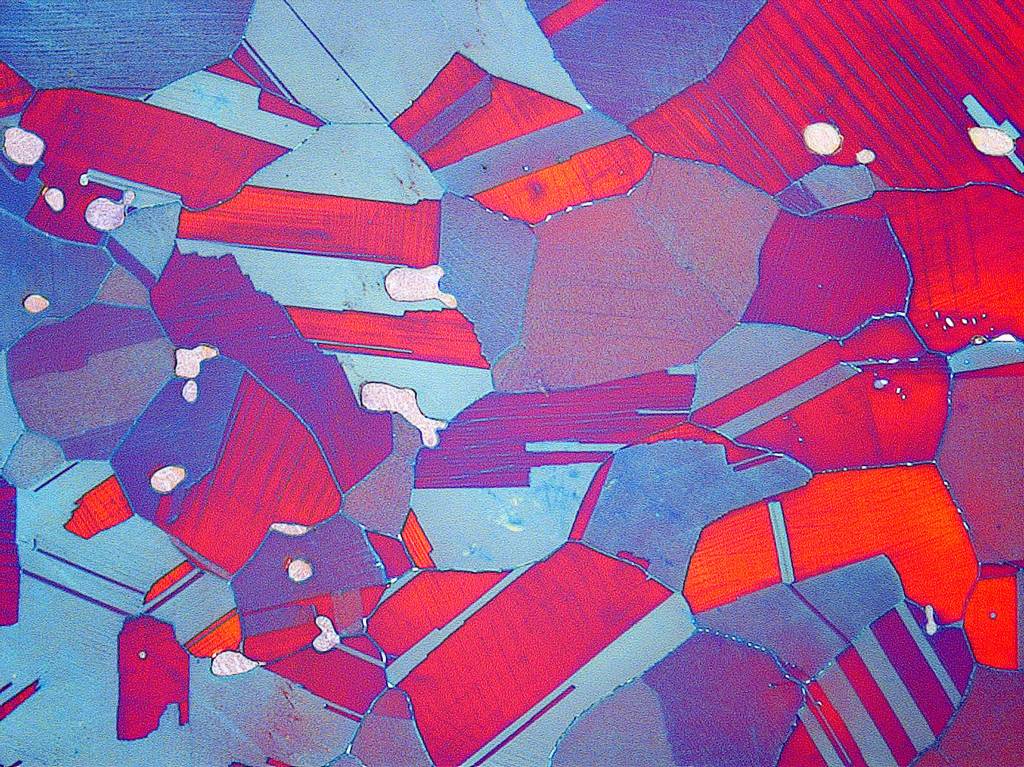
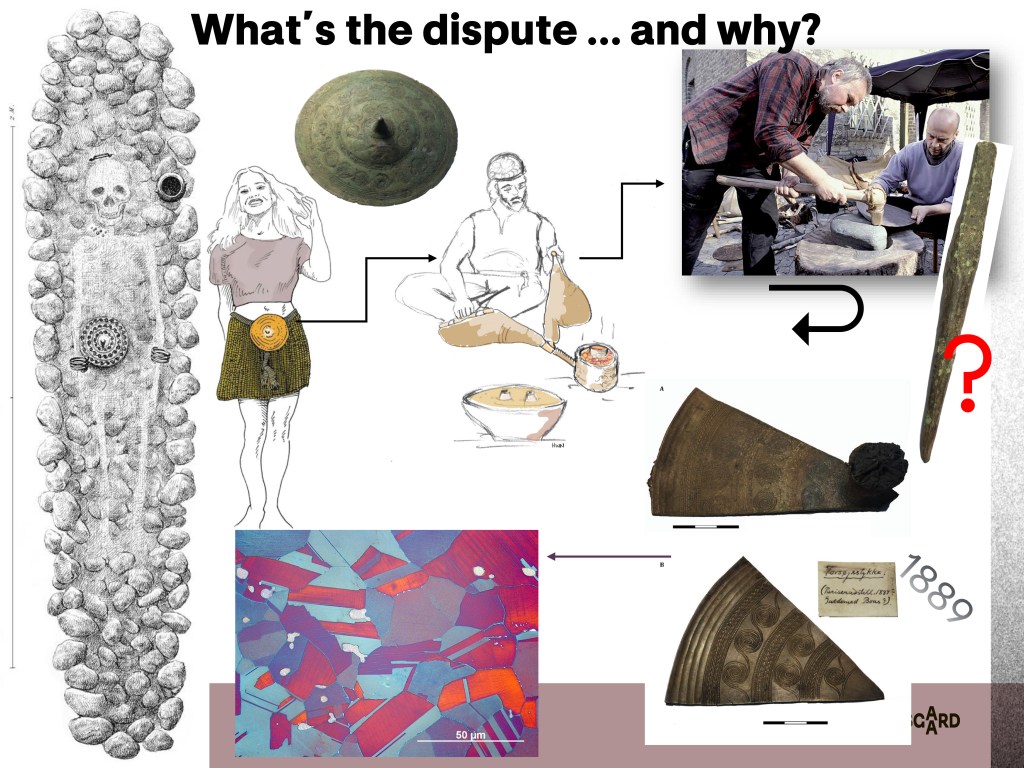
A microscopic image of a Bronze Age belt plate shows that the bronze disc was cast and finalised by forging (picture Heide W. Nørgaaard).
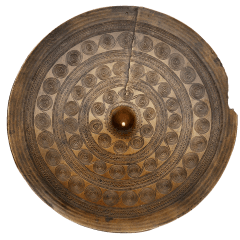
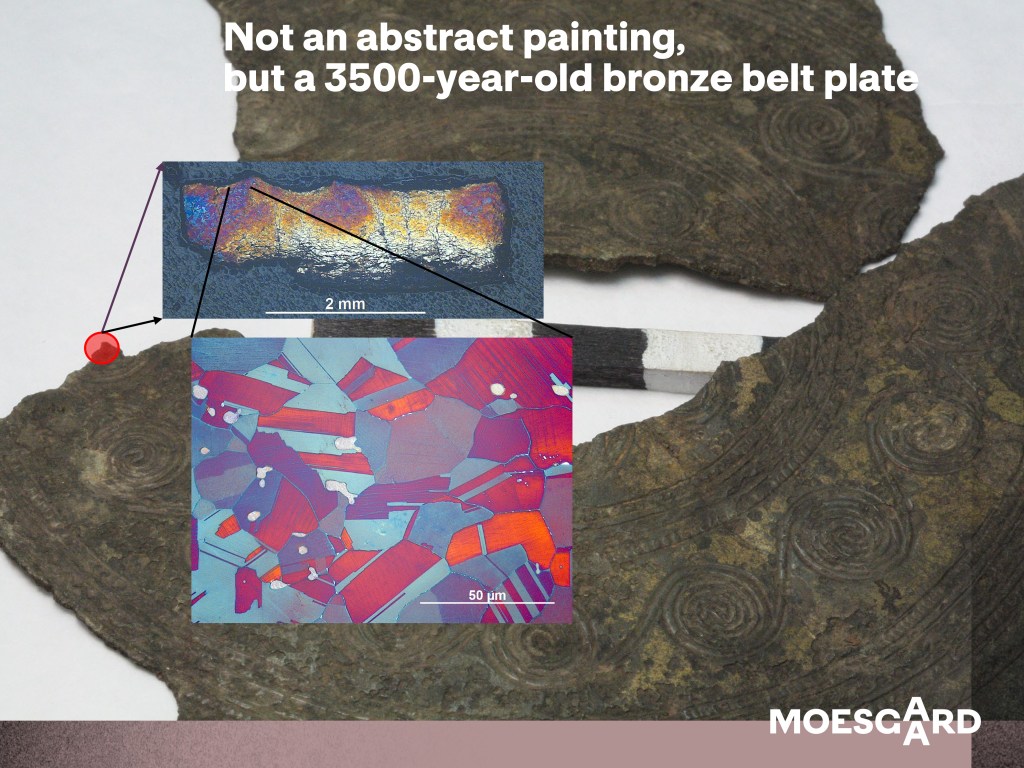
This micrograph of a 3,500-year-old bronze plate is key to understanding the technology and skill involved in making the large bronze jewellery that characterised the Danish Bronze Age and made this region unique. The production of these highly decorated objects has always been of public interest, as demonstrated by the attention it received from archaeologists since the inception of archaeology under J. J. A. Worsaae. In the 1870s, this practice sparked a debate among archaeologists, who doubted the feasibility of working bronze with bronze tools. First in the 1890´s the problem was solved through an experiment inititated by Sophus müller.
Vagn Frabricius Buchwald was the first person to apply the natural scientific method of metallography to Scandinavian prehistoric artefacts. This image of the crystallographic structure of a belt plate, prepared with a colouring etchant, proves that the bronze disc was cast and finalised by forging. Interdisciplinary research is the only way to solve disputes that have persisted for over a hundred years.
You want to know more? Watch a short video explaining the science behind the metallography on the Danish National Research Foundation homepage or here:
 Dr Heide Wrobel Nørgaard