Archaeological microimage takes third place in the 2025 DNRF photo competition.

Microscopic beauty settles an age old conflict
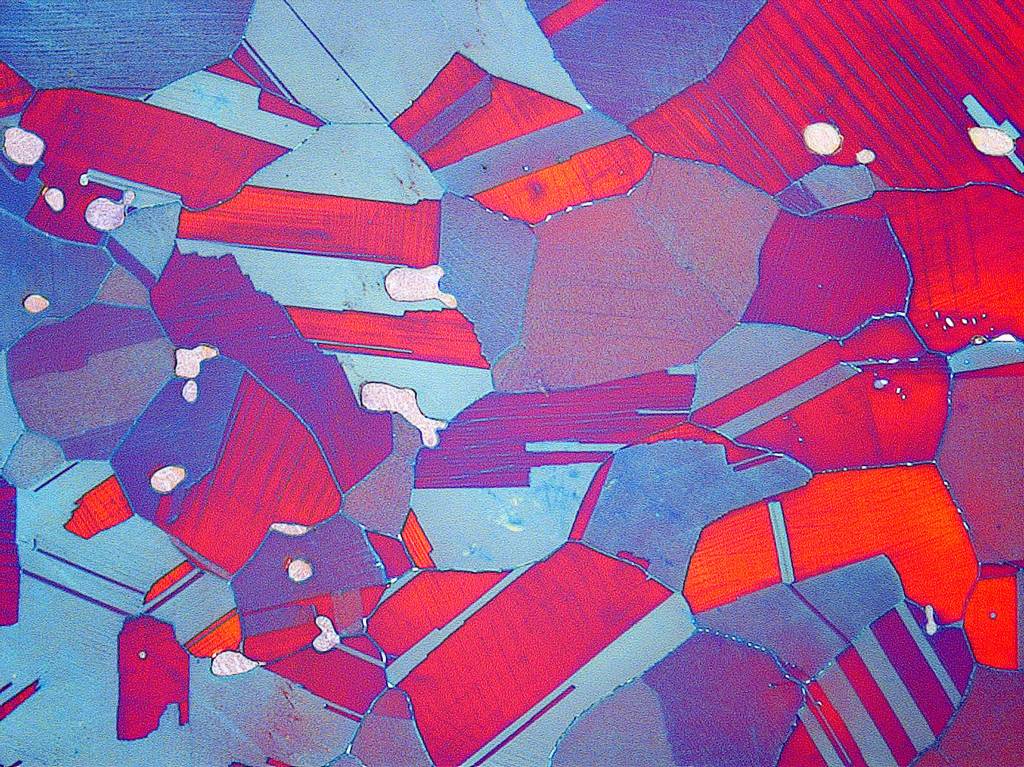
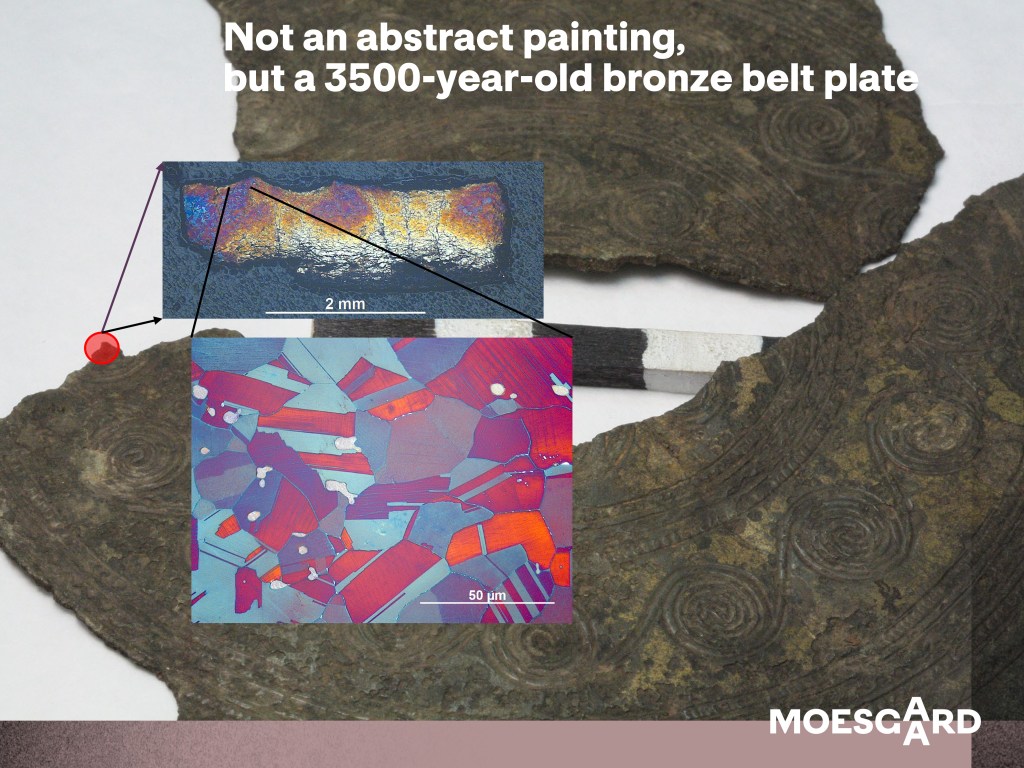
A microscopic image of a Bronze Age belt plate shows that the bronze disc was cast and finalised by forging (picture Heide W. Nørgaaard).

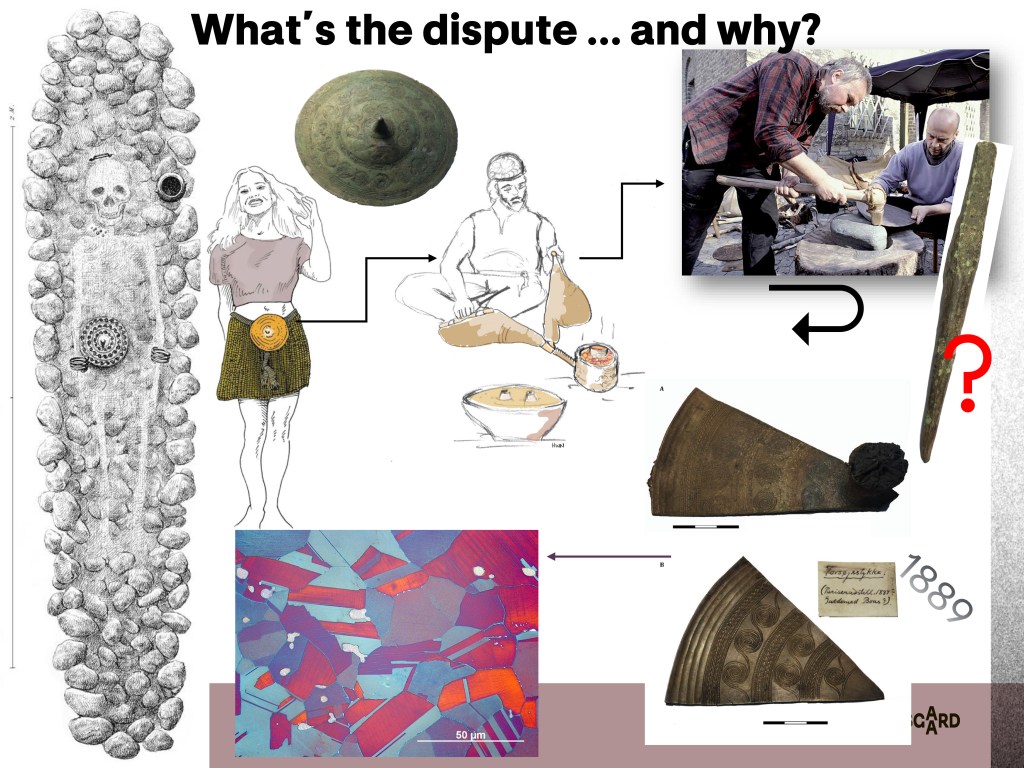
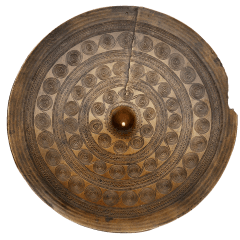
This micrograph of a 3,500-year-old bronze plate is key to understanding the technology and skill involved in making the large bronze jewellery that characterised the Danish Bronze Age and made this region unique. The production of these highly decorated objects has always been of public interest, as demonstrated by the attention it received from archaeologists since the inception of archaeology under J. J. A. Worsaae. In the 1870s, this practice sparked a debate among archaeologists, who doubted the feasibility of working bronze with bronze tools. First in the 1890´s the problem was solved through an experiment inititated by Sophus müller.

Vagn Frabricius Buchwald was the first person to apply the natural scientific method of metallography to Scandinavian prehistoric artefacts. This image of the crystallographic structure of a belt plate, prepared with a colouring etchant, proves that the bronze disc was cast and finalised by forging. Interdisciplinary research is the only way to solve disputes that have persisted for over a hundred years.
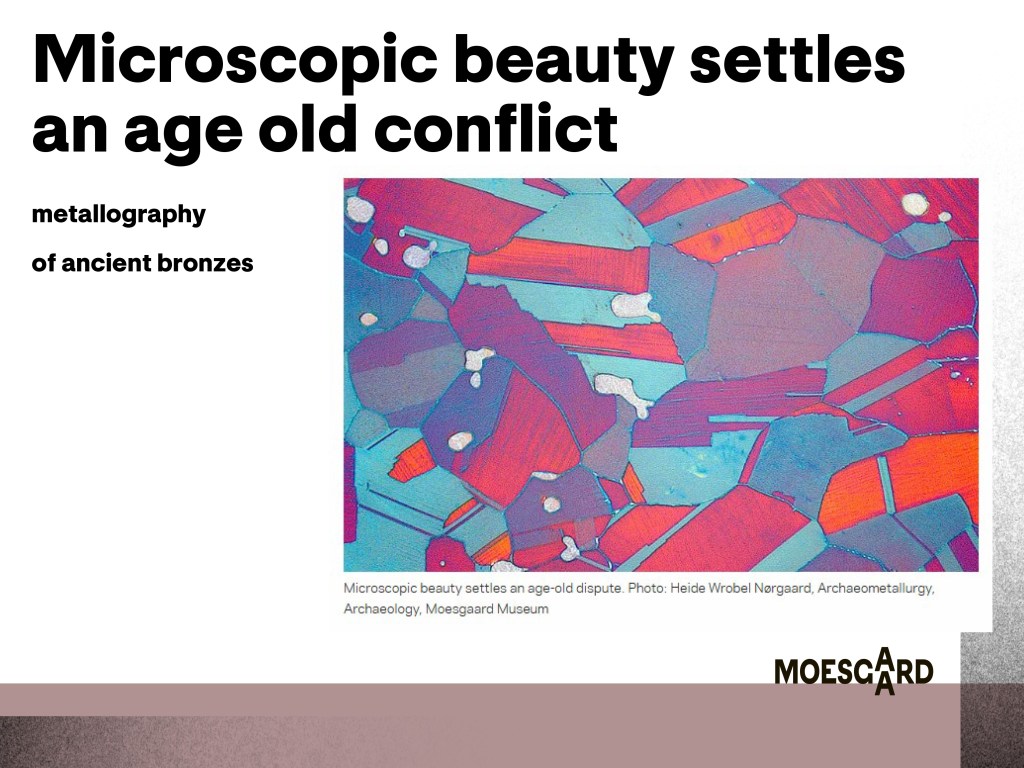
You want to know more? Watch a short video explaining the science behind the metallography on the Danish National Research Foundation homepage or here:
Horned Helmets are not a Viking Age Phenomenon!

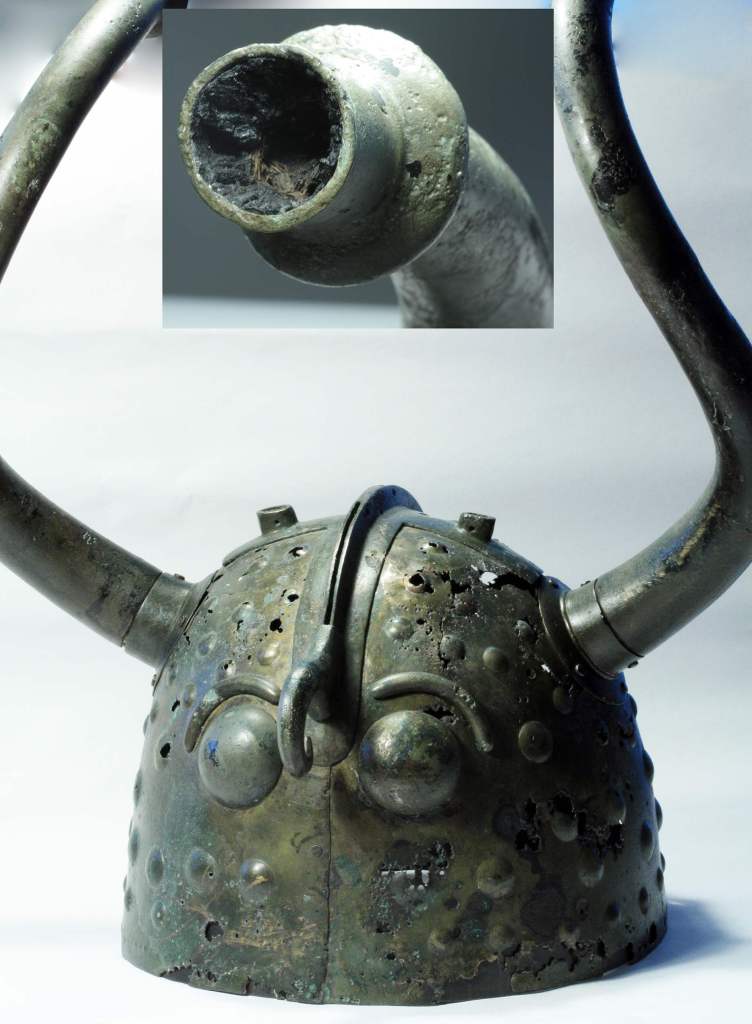
Yes, that is correct! They are part of a transfer of novel beliefs and cults that spread across Europe during the Late Bronze Age, around 1000 BC, as you can read in our new article published in Prähistorische Zeitschrift. The new radiocarbon date of one of the Viksø helmets did not confuse the archaeologists of this study, it supported much more what Danish research had long assumed. The interesting fact was, that the helmets date into a transition period within the Late Bronze Age. A detailed network analysis of the iconography revealed striking similarities between southwest Iberia, Sardinia and southern Scandinavia.

The sample for the new 14C date is taken from the horn opening (picture H. W. Nørgaard with permission by the National Museum Denmark)

This article caused quite a stir in the archaeological news world. Interestingly, it was mainly the fact that the horned helmets date from the Bronze Age that caught the interest of the press. Fortunately, this popular culture myth now seems to have been dispelled. Initiated by the first coverage in Science magazine, now CNN, The Times, LiveScience, the Smithsonian Magazine, Popular Science US, Daily Mail UK, Archaeology, wissenschaft.de, Süddeutsche Zeitung, Der Spiegel, National Geographic Spain and Hungary, Terrae Antigvae Spain, GEO France, ITALIA magazine, La Repubblica Italy, Jyllands-Posten and videnskab.dk also write about our research.

This research was funded by the Cultural Ministry of Denmark. Only due to the collaboration with the National Museum Denmark and Moesgaard Museum, the Curt-Engelhorn-Centre in Mannheim, the Museo Archeologico Nazionale di Cagliari in Sardinia, the Archaeological superintendency of Sardinia this paper by Helle Vandkilde (Aarhus University), Valentina Matta (Aarhus University), Laura Ahlqvist (Aarhus University) and Heide W. Nørgaard (Moesgaard Museum) could be published.

Horned helmets and warrior ideology in Bronze Age Europe

Today our article “Anthropomorphised warlike beings with horned helmets: Bronze Age Scandinavia, Sardinia, and Iberia compared”, written by Helle Vandkilde, Valentina Matta, Laura Ahlqvist and me, was published open access in Prähistorische Zeitschrift. It includes a brand-new C14-dating of the famous Viksø-helmets, a detailed network analysis of the iconography related to horned helmets and some ideas to how the similarity between Scandinavia, Sardinia and Iberia could be understood.

See what SCIENCE is writing about our new article…

https://www.science.org/content/article/bronze-age-power-helmets-unearthed-danish-bog